Upper Extremity Radiography: Hand & Wrist
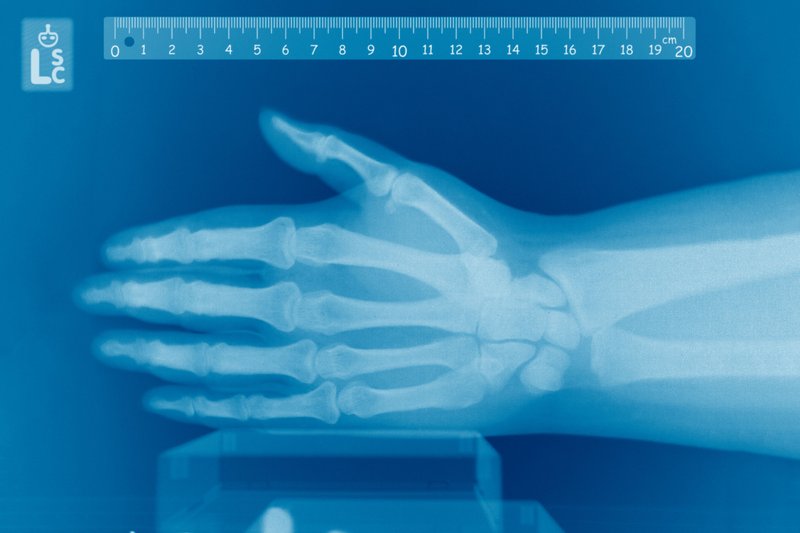
Hand, wrist, and elbow radiographs are common in emergency and outpatient practice. This positioning guide describes conventional adult techniques; pediatric, postoperative, weight-bearing, and institution-specific protocols may differ.
Getting the positioning right the first time isn't just about image quality. It's about patient care — reducing repeat exposures, minimizing discomfort for injured patients, and producing diagnostic images that allow accurate interpretation.
This guide covers conventional hand, wrist, and elbow projections, centering, evaluation criteria, and safe trauma modifications. It does not prescribe a universal exposure technique: use the department's validated technique chart and radiologist-approved projection set. For other positioning guides, see our knee X-ray positioning guide and abdominal X-ray positioning. CT or MRI should be selected for a defined clinical question rather than automatically added for every complex injury.
Hand Projections
A common hand trauma series is PA, PA oblique, and lateral, although the ordered views must follow local protocol and the clinical question. PA positioning places the palmar surface on the image receptor (IR), helping keep the hand parallel and stable.
PA Hand
| Parameter | Value |
|---|---|
| IR size | 18 × 24 cm or another detector size that includes all required anatomy |
| CR location | Perpendicular to the 3rd metacarpophalangeal (MCP) joint |
| SID | 100–110 cm (40–44 in), according to equipment/local protocol |
| Technique | Non-grid for a typical thin part; use the validated local technique chart |
| Evaluation criteria | Entire hand, carpus, and distal radius/ulna included; no soft-tissue clipping; phalangeal and metacarpal shafts without rotation; MCP and IP joint spaces as open as anatomy permits |
Positioning: Seat the patient at the end of the table. Place the forearm and palm flat on the IR with the shoulder, elbow, and wrist in the same plane. Extend and separate the digits slightly without strain; center perpendicular to the third MCP joint. Collimate to include the distal radius and ulna as well as all fingertip and soft-tissue margins.
PA Oblique Hand
| Parameter | Value |
|---|---|
| CR location | Perpendicular to the 3rd MCP joint |
| Obliquity | 45° lateral rotation from pronated |
| Immobilization | 45° radiolucent foam wedge under the elevated side |
Positioning: From PA, rotate the hand laterally approximately 45°. Support the hand and extended digits on a radiolucent wedge so the phalanges remain parallel to the IR. Center perpendicular to the third MCP joint.
Evaluation check: A correctly obliqued hand shows slight overlap of the third through fifth metacarpal heads, with the shafts generally separated. Excessive overlap indicates overrotation; absence of expected head overlap suggests underrotation.
Lateral Hand
| Parameter | Value |
|---|---|
| CR location | Perpendicular to the 2nd MCP joint |
| Position | Ulnar aspect down on IR |
| Fan lateral | Digits separated on radiolucent support when phalangeal detail is required |
Positioning: Place the ulnar aspect on the IR and center perpendicular to the second MCP joint. Use an extension lateral with the digits superimposed when metacarpal alignment or radiopaque foreign-body localization is the objective. Use a fan lateral, with digits supported and separated, to demonstrate the phalanges. The indication and local protocol determine which lateral is obtained.
Evaluation check: On an extension lateral, the metacarpals and distal radius/ulna are nearly superimposed and the thumb is free of the palm. On a fan lateral, the phalanges are separated; perfect metacarpal superimposition is not expected.
Wrist Projections
A common wrist series includes PA, PA oblique, and lateral projections. Some trauma protocols include a fourth view. A dedicated scaphoid projection may be obtained when clinically indicated; projection sets vary by institution.
PA Wrist
| Parameter | Value |
|---|---|
| IR size | 18 × 24 cm or another detector size that includes all required anatomy |
| CR location | Perpendicular to the midcarpal area |
| SID | 100–110 cm (40–44 in), according to equipment/local protocol |
| Technique | Non-grid for a typical thin part; use the validated local technique chart |
Positioning: Pronate the hand with shoulder, elbow, and wrist in the same plane. Slightly flex the digits to bring the carpus into closer contact with the IR; do not force a painful wrist. Center perpendicular to the midcarpal area and include the proximal metacarpals and distal radius/ulna.
Evaluation check: The carpus, proximal metacarpals, and distal radius and ulna are included. A PA wrist shows no significant rotation; the ulnar styloid is in profile medially and the distal radioulnar joint has only expected slight overlap.
PA Oblique Wrist
| Parameter | Value |
|---|---|
| CR location | Perpendicular to the midcarpal area |
| Obliquity | 45° lateral rotation from pronated |
| Use | Demonstrates the radial-side carpals, especially the scaphoid and trapezium, with reduced superimposition |
Positioning: From PA, rotate the wrist laterally approximately 45° and support it with a radiolucent wedge. Keep the forearm, wrist, and hand aligned; center perpendicular to the midcarpal area.
Lateral Wrist
| Parameter | Value |
|---|---|
| CR location | Perpendicular to the midcarpal area |
| Position | Ulnar aspect on IR; elbow flexed about 90°; shoulder, elbow, and wrist in one plane |
Positioning: Flex the elbow about 90° and place the ulnar aspect of the forearm, wrist, and hand on the IR. Depress the shoulder so the shoulder, elbow, and wrist share one plane. Adjust the hand until the wrist is a true lateral and center perpendicular to the midcarpal area. The radial styloid is an evaluation landmark, not the standard CR entry point.
Evaluation check: The distal radius and ulna are nearly superimposed, the metacarpals are superimposed, and the pisiform lies approximately midway between the palmar surfaces of the capitate and scaphoid. Slight normal offset of the distal radius and ulna can occur; demanding complete superimposition is too absolute.
Scaphoid View (Ulnar Deviation)
| Parameter | Value |
|---|---|
| CR location | Scaphoid (approximately 2 cm distal and medial to the radial styloid) |
| CR angulation | Protocol variant: perpendicular with ulnar deviation, or 10–15° proximally; an alternative Stecher method elevates the hand/IR about 20° with a perpendicular CR |
| Hand position | Deviated ulnarward (toward the little finger side) |
The scaphoid is the most commonly fractured carpal bone. Ulnar deviation helps reduce foreshortening; departments use different validated techniques to project the scaphoid without avoidable overlap. Do not combine every positioning modification unless the local protocol specifies it.
Elbow Projections
A routine elbow examination commonly includes AP and lateral projections; one or both AP obliques may be routine or additional views depending on the institution and indication. Never rotate or extend a traumatically injured elbow merely to reproduce a textbook position.
AP Elbow
| Parameter | Value |
|---|---|
| IR size | 18 × 24 cm or another detector size that includes all required anatomy |
| CR location | Perpendicular to the elbow joint, approximately 2 cm (¾ in) distal to the midpoint between the epicondyles |
| Position | Full extension, hand fully supinated |
Positioning: When tolerated, extend the arm and supinate the hand so the humeral epicondyles are parallel to the IR. Keep the shoulder, elbow, and wrist in one plane. Center approximately 2 cm distal to the midpoint of the epicondyles and include the distal humerus and proximal forearm.
Evaluation check: The distal humerus and proximal radius/ulna are included; the epicondyles are in profile, the elbow joint is open, and the radial head, neck, and tuberosity have slight expected superimposition over the proximal ulna. The olecranon is seated in the fossa.
Lateral Elbow
| Parameter | Value |
|---|---|
| CR location | Perpendicular to the elbow joint |
| Elbow flexion | About 90° when tolerated |
| Epicondyles | Perpendicular to the IR |
Positioning: Flex the elbow about 90° when the injury permits, place the thumb up, and align the shoulder and elbow in one plane. The epicondyles should be perpendicular to the IR. Center perpendicular to the elbow joint, approximately 2 cm distal to the midpoint between the epicondyles. Do not force flexion in acute trauma.
Evaluation check: The epicondyles are superimposed, the olecranon is in profile, and the radial head is partially superimposed on the coronoid process. A visible posterior fat pad or an elevated, sail-shaped anterior fat pad indicates elbow-joint effusion. In trauma this should prompt evaluation for an occult intra-articular fracture, but the sign is not itself proof of fracture; a small anterior fat pad can be normal.
AP Oblique Elbow
| Projection | Rotation | CR | Demonstrates |
|---|---|---|---|
| Medial (internal) rotation | 45° medially | Perpendicular to elbow joint | Coronoid process in profile; trochlea/ulna articulation |
| Lateral (external) rotation | 45° laterally | Perpendicular to elbow joint | Radial head, neck, and tuberosity with minimal ulnar superimposition |
Positioning for medial rotation: From AP, rotate the entire arm medially about 45° while maintaining extension when tolerated; center perpendicular to the elbow joint. The coronoid process is shown in profile.
Positioning for lateral rotation: From AP, rotate the entire arm laterally about 45° while maintaining extension when tolerated; center perpendicular to the elbow joint. The radial head, neck, and tuberosity have minimal rather than necessarily zero ulnar superimposition.
Upper Extremity Projection Summary
| Body Part | Projection | CR Location | Key Positioning Point |
|---|---|---|---|
| Hand | PA | 3rd MCP joint | Palm flat; digits extended and slightly separated |
| Hand | PA Oblique | 3rd MCP joint | 45° lateral rotation |
| Hand | Lateral | 2nd MCP joint | Extension lateral for metacarpals/foreign body; fan lateral for phalanges |
| Wrist | PA | Midcarpal area | Digits flexed, wrist in contact |
| Wrist | PA Oblique | Midcarpal area | 45° lateral rotation |
| Wrist | Lateral | Midcarpal area | Ulnar aspect down; shoulder, elbow, wrist in one plane |
| Wrist | Scaphoid | Scaphoid | Ulnar deviation; perpendicular or 10–15° proximal CR by protocol |
| Elbow | AP | About 2 cm distal to midpoint of epicondyles | Full extension and supination when tolerated |
| Elbow | Lateral | Elbow joint | About 90° flexion when tolerated; epicondyles superimposed |
| Elbow | AP Oblique Medial | Elbow joint | 45° medial rotation (coronoid process) |
| Elbow | AP Oblique Lateral | Elbow joint | 45° lateral rotation (radial head) |
Common Positioning Errors
Hand
- Unequal shoulder–elbow–wrist height — slopes the hand relative to the IR and may close joint spaces. Adjust chair/table height or use radiolucent support without moving a suspected fracture.
- Lifted or curled fingers — closes IP joints. Extend the digits without strain and keep the phalanges parallel to the IR.
Wrist
- Rotation on lateral wrist — use radial/ulnar and pisiform relationships to assess true lateral positioning. Rotation can limit evaluation of carpal alignment; it does not make all evaluation categorically impossible.
- Forced ulnar deviation — may worsen pain after trauma. Deviate only as tolerated and document limitations; never repeat solely to achieve a textbook appearance without considering the diagnostic need.
Elbow
- Incorrect or forced flexion on lateral — about 90° is standard when tolerated, but trauma safety takes priority. Flexion substantially greater than 90° can compress or obscure the fat pads.
- Patient leaning — if the patient leans toward or away from the table, the elbow rotates out of true AP or lateral position. Watch the patient's torso alignment, not just the arm.
Registry Study and Clinical Safety Points
- PA hand centering = 3rd MCP joint.
- Lateral elbow flexion ≈ 90° when tolerated. Patient safety overrides exact positioning after trauma.
- Oblique elbow, medial rotation = coronoid process — lateral rotation = radial head.
- Lateral hand choice: fan lateral separates phalanges; extension lateral better preserves metacarpal relationships and is commonly used for radiopaque foreign-body localization.
- Scaphoid technique is protocol dependent: ulnar deviation with a perpendicular CR, 10–15° proximal CR, and Stecher-type elevation are recognized variants.
- Grid use: a grid is generally unnecessary for a thin hand, wrist, or elbow. Base grid use on part thickness, scatter, equipment, and the validated technique chart—not a fixed kVp threshold.
- Collimation: restrict the beam to required anatomy while retaining all relevant bone and soft-tissue margins. This reduces irradiated tissue and scatter.
- Immobilization: use radiolucent supports or other department-approved aids without applying pressure over a suspected injury. Never tape or weight a painful digit merely to force position.
Exposure, Pregnancy, and Shielding
- Exposure: there is no universal kVp/mAs pair for every detector and patient. Use the validated local technique chart, tight collimation, and a short exposure time. Evaluate positioning and processing before repeating; do not repeat solely for cosmetic perfection.
- Pregnancy: an indicated hand, wrist, or elbow radiograph directs the primary beam far from the uterus and generally produces only very low fetal scatter exposure. Follow the facility's pregnancy-screening policy, but do not delay medically necessary imaging without discussing alternatives with the responsible clinician/radiologist.
- Patient contact shielding: routine gonadal/fetal shielding is not recommended by current medical-physics guidance. A shield provides negligible benefit when the pelvis is outside the beam and can obscure anatomy or cause a repeat if misplaced. Respect local regulation and explain the policy to the patient.
- Operators and helpers: step behind a protective barrier whenever possible. If a helper must remain, follow facility policy for positioning, protective apparel, and occupational/public dose limits; the patient should not routinely be held by staff.
Frequently Asked Questions
Where is the central ray for a PA hand?
Direct it perpendicular to the third MCP joint. Include the entire hand, carpus, and distal radius and ulna without clipping soft tissue.
Which lateral hand position should be used?
Use an extension lateral when metacarpal alignment or radiopaque foreign-body localization is the goal. Use a fan lateral when the phalanges need to be separated. Follow the clinical question and local protocol.
What if scaphoid fracture is suspected but initial radiographs are negative?
Do not exclude fracture from negative initial images. A dedicated scaphoid projection may be part of the initial protocol, but persistent suspicion requires immobilization and clinician-directed follow-up. ACR lists MRI without contrast, CT without contrast, or repeat radiographs in 10–14 days as usually appropriate next studies.
What elbow projection best demonstrates the radial head and neck?
The AP oblique elbow with about 45° lateral rotation demonstrates the radial head, neck, and tuberosity with minimal ulnar superimposition. Do not force the position after trauma.
How is a true lateral elbow recognized?
With about 90° flexion when tolerated, the epicondyles are superimposed, the olecranon is in profile, and the radial head is partially superimposed on the coronoid. A visible posterior or elevated anterior fat pad indicates effusion, not a fracture by itself.
Are grids and patient contact shields routine for distal upper-extremity work?
A grid is generally unnecessary for a thin hand, wrist, or elbow; use depends on thickness and the local technique chart, not one kVp cutoff. Routine gonadal or fetal contact shielding is not recommended; correct exposure selection and collimation remain essential.
Scope and Sources
This page covers hand, wrist, and elbow positioning only; it does not substitute for dedicated finger/thumb, forearm, humerus, or shoulder protocols. Forearm examinations must include both wrist and elbow joints, and suspected proximal injuries may require dedicated elbow, humerus, or shoulder images as ordered—one image should not be stretched to replace a complete adjacent-joint examination.
- Lampignano & Kendrick, Bontrager's Textbook of Radiographic Positioning and Related Anatomy, 10th ed. — projection names, centering, rotation, anatomy demonstrated, evaluation criteria, and trauma modifications.
- ACR Appropriateness Criteria®: Acute Hand and Wrist Trauma — initial radiography and next imaging after negative/equivocal initial radiographs.
- AAPM Position Statement on Patient Gonadal and Fetal Shielding (PS 8-A) — current rationale for discontinuing routine patient contact shielding.
- ASRT Practice Standards for Medical Imaging and Radiation Therapy — assessment, optimization, collimation, pregnancy-policy compliance, and safe practice.
- ARRT Examination Content Specifications — confirms the content domain; ARRT does not publish item-frequency claims.