Philippine RTLE Exam Prep: 5 Subjects
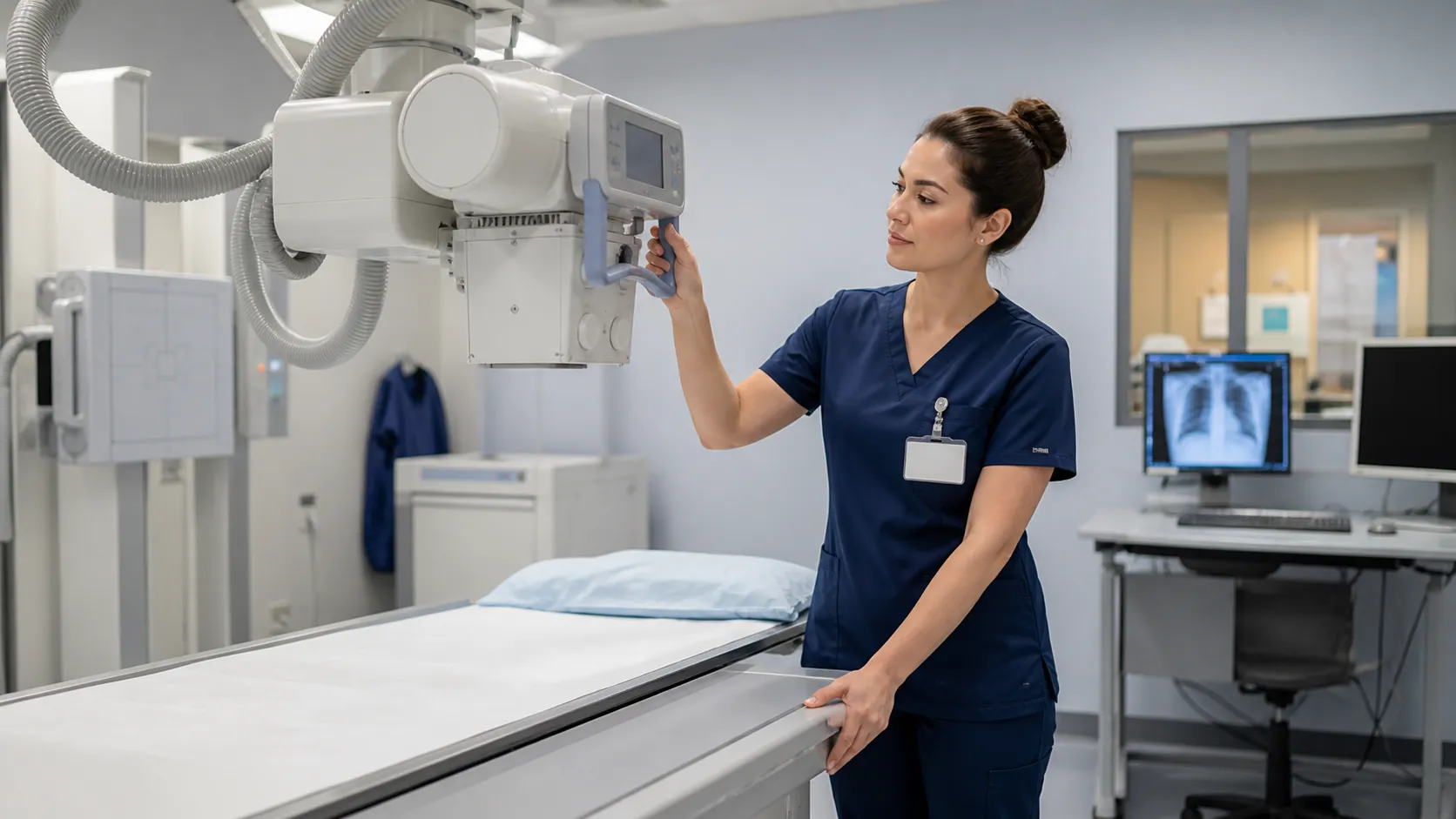
If you're a BS Radiologic Technology graduate in the Philippines, you may be preparing for the Radiologic Technologists Licensure Examination (RTLE), administered by the Professional Regulation Commission (PRC) through the Professional Regulatory Board of Radiologic Technology. The three regular December cohorts from 2023–2025 recorded pass rates from 55.57% to 59.49%; those cohort statistics do not determine how any individual candidate will perform.
This guide covers everything you need to know: the exam structure, subject breakdown, a study plan, historical pass rates, registration requirements, and links to PART and PRC resources. Whether you're a first-taker or a retaker, this is your one-stop prep resource.
🇵🇭 Quick Facts
PRC reported 2,629 passers out of 4,419 examinees (59.49%) for the December 2025 RTLE.
This is a historical cohort result, not the minimum passing score. The legal passing rule is a weighted average of at least 75%, with no subject rating below 60%.
Exam Overview
The RTLE is scheduled over two consecutive days. For 2026, PRC scheduled the regular examination for December 10–11, 2026. A separate 2026 Special Professional Licensure Examination (SPLE) was scheduled for May 29–30 in Singapore and Taiwan; an overseas SPLE is a separately announced offering, not a routine June sitting available at domestic centers. Always check the current PRC schedule and your Notice of Admission.
| Detail | Information |
|---|---|
| PRC Name | Radiologic Technologists Licensure Examination (RTLE) |
| Administered By | Professional Regulation Commission (PRC) — Board of Radiologic Technology |
| Exam Format | Written licensure examination in scheduled subject sessions; follow the program for your administration and your Notice of Admission for current instructions and permitted materials |
| Duration | 2 consecutive days |
| 2026 Regular Schedule | December 10–11; PRC lists an application period of September 11–November 10 |
| 2026 SPLE | May 29–30 in Singapore and Taiwan (separately administered overseas examination) |
| Passing Rule | Weighted average of at least 75%, with no subject rating below 60% (RA 7431, Sec. 22) |
| Result Release | PRC's 2026 schedule lists December 16 as the target release date; release timing is not a permanent three-day guarantee |
| Registration | Passing must be followed by the professional oath and PRC initial registration before practice |
| 2026 Regular Testing Centers | NCR, Baguio, Butuan, Cagayan de Oro, Cebu, Davao, Iloilo, Legazpi, Lucena, Pampanga, Rosales, Tacloban, Tuguegarao, and Zamboanga (subject to PRC updates) |
The 5 Subjects in the May 2026 SPLE Program (20% Each)
PRC's official May 2026 SPLE program assigns 20% to each of five examination subjects. RA 7431 preserves the Board's authority to modify the statutory subject breakdown. Candidates for the regular December examination should use the program issued for that administration when available rather than assume that an SPLE program or an old syllabus is controlling.
📊 Official May 2026 SPLE Weight Distribution
In the official May 2026 SPLE program, all five examination subjects are 20% each. The program publishes no guaranteed question count for any named area or narrower topic.
Subject 1: Radiologic Physics, Equipment, Biology, Protection (20%)
The program names six areas. The examples after each dash are study prompts, not a PRC topic allocation or exhaustive table of specifications:
- Radiologic Physics — nature of radiation, X-ray production, beam characteristics (quality, intensity, filtration), photon interactions with matter (photoelectric, Compton, coherent scatter)
- Imaging Equipment and Maintenance — imaging-system components, operation, performance, and maintenance concepts
- Radiobiology — biological effects of ionizing radiation, radiosensitivity of tissues, cellular response, dose-response curves
- Radiation Protection — justification and optimization of medical exposures, time-distance-shielding, patient protection, personnel monitoring, and applicable worker/public limits. Dose limits do not apply to a patient's medically indicated exposure; use applicable Philippine rules and facility protocols.
- Quality Assurance — QC testing protocols, image quality standards, preventive maintenance
- Imaging Science Informatics — digital imaging and information-system fundamentals
Subject 2: Image Production and Evaluation (20%)
The program names three areas. Illustrative study prompts include:
- Film-Screen Imaging — screen phosphors, film processing chemistry, characteristic curve (H&D), exposure factors (kVp, mAs, SID, OID), image artifacts
- Principles of Imaging — spatial resolution, contrast, distortion, noise/quantum mottle, receptor exposure and displayed brightness; optical density is specifically a film-screen concept
- Computed & Digital Radiography — CR plates, DR detectors, exposure index (EI), image processing algorithms, windowing/leveling, digital QA
💡 Study tool: Use our interactive radiography calculators to practise inverse-square and exposure-factor exercises. The film-screen density-maintenance formula and 15% rule are educational approximations, not universal digital-imaging or patient-exposure protocols, and PRC does not publish a topic-level question count for them.
Subject 3: Radiographic Positioning and Radiologic Procedures (20%)
The program names “Radiologic Procedures and Positioning” and “Radiologic Contrast Examination.” Illustrative study prompts include:
- Radiographic Positioning — positioning principles across anatomical regions, landmarks, immobilization, and patient-specific adaptations where included in the applicable curriculum or examination guidance
- Contrast Examinations — contrast classes and routes, patient preparation and screening, and recognition/escalation of adverse reactions. Contrast selection, administration, and treatment must follow an authorized order or protocol, product information, facility emergency procedures, and the technologist's lawful role.
- Procedure adaptations — decubitus, stress or weight-bearing projections and mobile/operating-room work where included by the applicable curriculum or examination guidance
Subject 4: Patient Care and Management (20%)
The program names six areas. Illustrative study prompts include:
- Human Anatomy & Physiology — anatomy and physiology relevant to radiologic practice
- Medical Terminology — prefixes, suffixes, root words, abbreviations commonly used in radiology
- Patient Care — communication, standard precautions, aseptic technique, vital signs, transfer safety, and recognition and protocol-based escalation of emergencies; provide only care authorized by current training, facility policy, and professional scope
- Professional Ethics and Jurisprudence — including RA 7431 (Radiologic Technology Act of 1992), professional duties, ethics, confidentiality, consent, and legal accountability
- Administration and Leadership — healthcare organization, quality improvement, documentation, and resource management
- Radiologic Pathology — disease processes and their imaging manifestations; image interpretation and diagnosis remain the responsibility of appropriately authorized practitioners
Subject 5: Radiological Sciences (20%)
The May 2026 SPLE program names these seven areas. The details after each dash are illustrative study prompts, not promised subtopic coverage:
- Ultrasonography — ultrasound physics, transducer types, scanning techniques, Doppler principles
- Computed Tomography — CT physics, reconstruction, dose modulation, and dose indices such as CTDIvol and DLP; these scanner-output indices are not a patient's absorbed dose
- Magnetic Resonance Imaging — MRI physics, pulse sequences, controlled access, projectile/RF/acoustic risks, and patient and implant/device screening based on current labeling and site MR-safety policy rather than a simplistic universal “contraindication” list
- Nuclear Medicine — radiopharmaceuticals, gamma camera, SPECT, PET, radiation safety in NM
- Interventional Radiology — angiography, catheter placements, biopsies, sterile technique, radiation dose management in fluoroscopy
- Radiation Therapy — principles of radiation oncology, treatment planning, dose fractionation, teletherapy vs brachytherapy
- Pharmacology & Venipuncture — relevant medications, contrast agents, IV-access concepts, and adverse-reaction recognition within lawful professional scope, an authorized order, competency validation, and local protocol
Selected Historical Pass Rates (2015–2025)
Among the selected cycles below, December 2025 has the highest calculated cohort pass percentage. That comparison does not establish a trend or its cause: administrations differed by date and may differ in candidate population and circumstances.
| Exam Cycle | Examinees | Passers | Pass Rate |
|---|---|---|---|
| Dec 2025 | 4,419 | 2,629 | 59.49% |
| Dec 2024 | 4,257 | 2,450 | 57.55% |
| Dec 2023 | 3,878 | 2,155 | 55.57% |
| Jun 2023 | 1,237 | 385 | 31.12% |
| Dec 2022 | 3,759 | 1,515 | 40.30% |
| May 2022 | 112 | 36 | 32.14% |
| Dec 2021 | 2,177 | 786 | 36.10% |
| Jul 2019 | 4,505 | 2,338 | 51.90% |
| Jul 2018 | 4,356 | 2,056 | 47.20% |
| Jul 2017 | 4,195 | 1,945 | 46.36% |
| Jul 2016 | 3,833 | 1,639 | 42.76% |
| Jul 2015 | 3,043 | 1,325 | 43.54% |
Note: These are selected PRC-announced cohorts, not a continuous series. A cohort pass percentage is passers divided by examinees and is not the statutory passing score. Dates and locations changed across administrations; the 2026 overseas SPLE is May 29–30 in Singapore and Taiwan, while the 2026 regular examination is scheduled for December 10–11.
12-Week Study Plan for the RTLE
Weeks 1-3: Physics & Image Production
Start with the science. If you understand why X-rays are produced and how they interact with matter, everything else in radiography becomes clearer. Focus on:
- X-ray tube components and the production of Bremsstrahlung and characteristic radiation
- The electromagnetic spectrum, photon energy, wavelength, and frequency
- Photoelectric vs Compton scatter — and how each affects image quality and patient dose
- kVp, mAs, SID, OID — and the formulas that connect them (use our calculators to drill these)
- Digital imaging concepts: CR vs DR, pixel, matrix, bit depth, exposure index
Weeks 4-6: Positioning & Procedures
Go region by region. For each projection, memorize:
- Part position — patient orientation, anatomical landmarks
- Central ray — entrance point, angle, and exit point
- Structures demonstrated — what the image should clearly show
- Evaluation criteria — how to tell if the image is acceptable
Review contrast examinations named in your current official materials, such as gastrointestinal, urinary, or reproductive-system studies where applicable. PRC's public program does not assign a question count to any individual procedure.
Weeks 7-9: Patient Care & Ethics
The official program names Professional Ethics and Jurisprudence within Patient Care and Management but does not publish its internal question weight. Review:
- The key provisions of RA 7431 (Radiologic Technology Act of 1992)
- Patient rights, confidentiality, and informed consent
- Contrast-media reaction recognition and role-appropriate action under the facility's current emergency protocol
- Infection control: standard precautions, sterilization levels, and aseptic technique
- Vital signs and emergency response consistent with current certified training, assigned role, and facility protocol
Weeks 10-11: Advanced Modalities
Cluster 5 covers a lot of ground. Prioritize:
- CT: Hounsfield units, window width/level, image reconstruction, and the distinction between CTDIvol/DLP scanner-output indices and patient-size-adjusted estimates such as SSDE
- MRI: T1 vs T2 weighting, basic pulse sequences, controlled-access concepts, and site-specific screening and emergency procedures
- Ultrasound: Transducer frequencies, Doppler modes, acoustic impedance
- Nuclear Medicine: Common radiopharmaceuticals by organ system, gamma camera principles
- Radiation Therapy: Teletherapy vs brachytherapy, treatment planning basics, dose fractionation
Week 12: Mixed Practice & Final Review
Use timed, mixed-subject practice if it helps your pacing. Review every uncertain or wrong answer against a reliable source and categorize weak areas by the five official subjects. A review-provider score is not a PRC licensure rating and cannot guarantee the result.
🎯 Use Practice Deliberately
Retrieval practice can expose weak areas, but PRC does not prescribe a daily question quota. Choose a sustainable volume, check explanations against authoritative references, and return to the official subject outline rather than memorizing an answer bank.
Registration Requirements
Applications are filed through the PRC LERIS online portal at online.prc.gov.ph. PRC's current Radiologic Technology requirements list:
- PSA Birth Certificate — original and photocopy
- PSA Marriage Contract for a married female applicant unless she prefers to use her maiden name — original and photocopy
- Transcript of Records with the applicable CHED Special Order information, scanned picture, and the remark “For Board Examination Purposes” — original and photocopy
- One Certificate of Good Moral Character from a barangay, church, school, or employer
- Examination fee: PRC currently lists ₱900 for a complete examination and ₱450 for a conditioned/removal examination
Eligibility: Section 19 of RA 7431 requires an RTLE applicant to be a Filipino citizen, be of good moral character and not convicted of a crime involving moral turpitude, and hold a baccalaureate degree in radiologic technology from a government-recognized institution. The section does not state a separate clinical-case or clinical-hour threshold. Follow the current PRC checklist and LERIS appointment instructions because documentary requirements can change.
After the Exam
Release timing varies. PRC's 2026 schedule lists December 16, 2026 as the target release date for the December 10–11 RTLE; candidates should check the current PRC announcement rather than rely on a permanent “three working days” rule. Successful examinees then proceed to:
- Professional oath — use the method and schedule in the applicable PRC announcement; RA 7431 requires the oath before practice
- Initial registration — follow current LERIS/PRC instructions for the Professional Identification Card, Certificate of Registration, and Roster of Registered Professionals
- Practise only after registration — passing the examination alone does not authorize practice or use of a representation that one is registered
Use the successful-examinee announcement and LERIS instructions for the current oath-taking and initial-registration documents and fees; do not rely on an old generic checklist.
PART Resources & Links
The Philippine Association of Radiologic Technologists, Inc. (PART) is a professional association. PRC's 1993 syllabus resolution described PART as the accredited professional association consulted on that historical syllabus; that is a historical statement, not proof of current accreditation status. Current PRC/Board programs and issuances—not an association or review provider—control current examination requirements.
- 📘 PART Facebook: facebook.com/part.events
- 📋 PRC RadTech Page: prc.gov.ph/radiologic-technology
- 📄 PRC LERIS (Online Application): online.prc.gov.ph
- 🗓️ PRC 2026 Examination Schedule: regular examination dates and application periods
- 📝 Official May 2026 RTLE SPLE Program: PRC/Board overseas SPLE program showing the five subjects and 20% weights
- 📋 PRC Requirements: official profession-specific document checklist
- 📖 Historical PRC Board Syllabus Resolution: Resolution No. 14, series of 1993 — historical context, not the current subject-weight program
- ⚖️ Radiologic Technology Act: Republic Act No. 7431
Final Advice
Historical pass rates vary and do not predict an individual result. Cover all five official subjects, use the current PRC program as your checklist, verify clinical explanations against reliable references, and use practice questions to diagnose—not define—your knowledge.
Good luck with your RTLE preparation. 🇵🇭
📝 Free RTLE Diagnostic Quiz
Test your knowledge with our free 25-question RTLE diagnostic sampling all five examination subjects. Timed at 30 minutes with instant explanations; it is an educational tool, not a PRC examination or score predictor. Start the free RTLE diagnostic →